
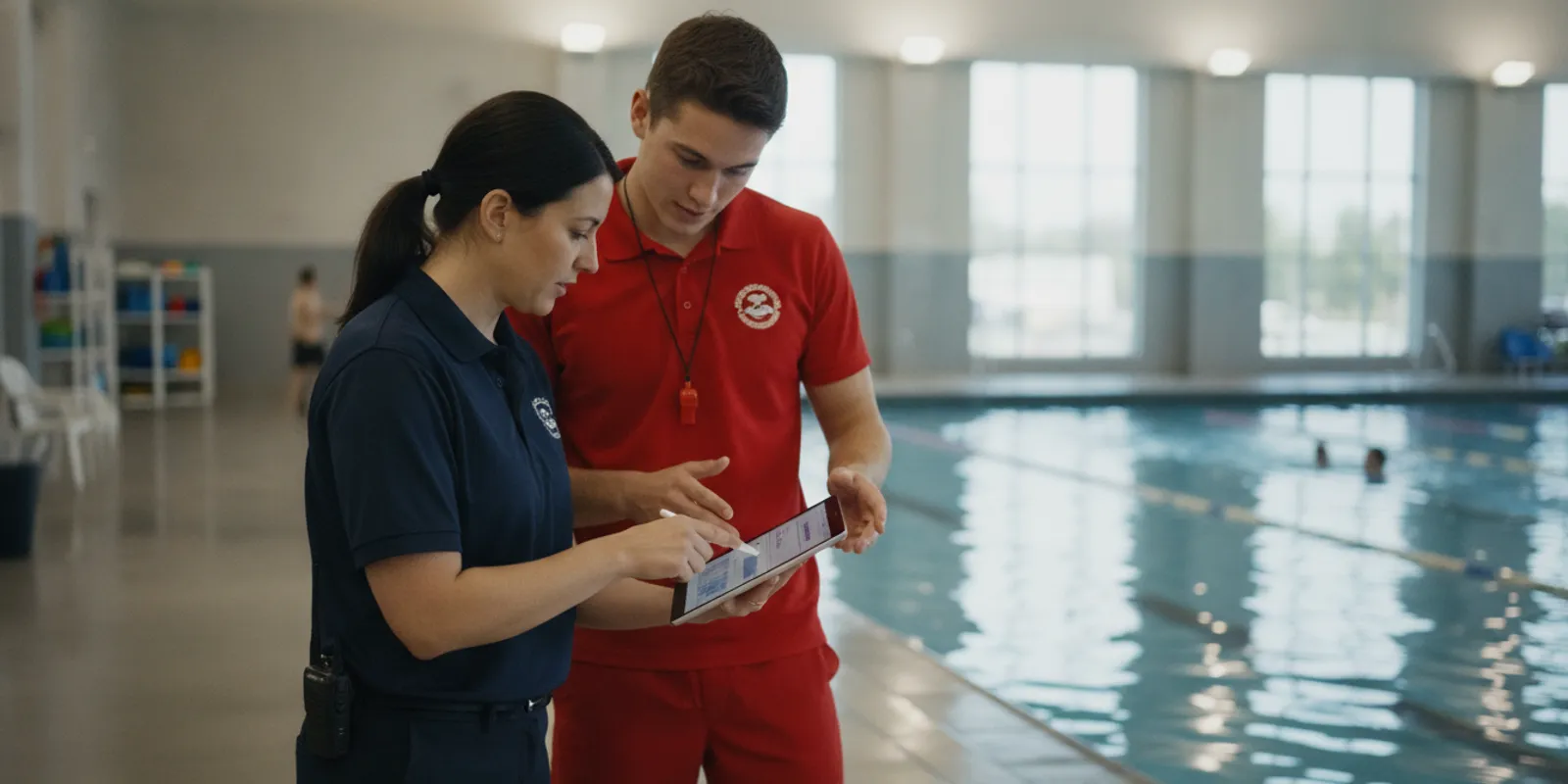
Aquatic facility alert data questions for supervisors should look past whether a signal appeared. After a safety event, drill, or unexpected alert, leaders need to understand when the signal was generated, who received it, what actions followed, and what the records cannot establish. A consistent review helps turn alert information into useful operational learning without treating technology as a substitute for trained lifeguards, active supervision, or the facility’s emergency action plan.
What aquatic facility alert data questions should supervisors establish first?
Begin with a clear definition of the event and a reliable record set. Separate confirmed facts from estimates, preserve original materials, and use the facility’s procedures as the reference point for understanding what happened and deciding what deserves follow-up.
Before comparing timestamps or staff accounts, decide what is being reviewed. An actual emergency, a drill, a planned equipment test, and an alert with no emergency identified are not interchangeable. Labeling the event at the outset makes later review more useful and prevents routine tests from being mixed into emergency response data.
Write down the event date, location, operating conditions, system components in use, and the roles of people involved. Use roles rather than unnecessary personal details in working notes. Record who supplied each time estimate and whether it came from a system log, a radio record, a written report, or recollection. If accounts differ, preserve the difference until it can be checked.
Gather the records that may illuminate the sequence. Depending on facility practices and available equipment, these may include alert logs, staff notes, communications, equipment readiness checks, incident documentation, and training records. Confirm how each record was created and whether the clocks were synchronized. A timestamp is evidence of a recorded system event; by itself, it does not prove what a staff member saw or understood.
- Preserve source records, then use working copies for annotations and comparisons.
- Assign one person to coordinate the review and identify staff who can explain particular steps.
- Follow facility policy for privacy, retention, reporting, and access to sensitive records.
- Keep observations separate from interpretations so later reviewers can see the basis for each conclusion.
Set a short scope statement before the review begins. For example, the scope might be to review the alert sequence and staff handoff during Tuesday’s drill. It can also name any gap in role clarity and assign corrective practice. A defined purpose keeps the team from drifting into unrelated issues. It also limits broad judgments the available information does not support.
For general public-health background, supervisors can consult the Centers for Disease Control and Prevention, a federal source for health and drowning-prevention information. Use that resource for broader context, while relying on current facility procedures, applicable local requirements, and qualified professionals for decisions about a specific event.
Wave Aquatic Safety describes its wearable, wireless approach as an additional layer of protection that supports staff. Its system is designed to detect prolonged submersion or lifeguard water entry and send alerts through vibrating bracelets and facility alerts. Supervisors evaluating any alert workflow should ask how the signals connect with assigned roles and the site’s response plan. See the GUARDian Hub overview for information about the system design.
Which alert and response times matter most?
Review the full sequence instead of treating one timestamp as a performance score. The practical questions are when a condition was detected, how the alert traveled, who acknowledged it, and whether the required response began in line with the facility’s plan.
A useful timeline distinguishes system activity from human actions. Depending on available records, mark the detected condition, alert transmission, staff receipt, acknowledgment, movement toward the location, assessment, and any escalation or handoff. Not every system records each step, so identify missing data instead of filling gaps with assumptions.
Build the timeline in a shared format that shows time, event, source, and confidence. If a staff note says “about 2:10” while a log shows 2:12, retain both entries and investigate the difference. Check whether devices used the same clock and whether a report was written during the event or afterward. This creates a transparent basis for discussion.
| Review point | Possible record | Question to ask |
|---|---|---|
| Detection | System event record or test log | What condition or test produced the recorded event? |
| Alert delivery | System log, wearable, facility alert | When and where was the signal issued, if recorded? |
| Receipt and acknowledgment | Staff notes, radio record, alert record | Who received the signal, and how was receipt confirmed? |
| Initial response | Incident timeline and staff accounts | What action did the assigned responder take under the plan? |
| Escalation or handoff | Communications and incident report | Were backup duties and notifications clear? |
| Return to readiness | Equipment check and debrief notes | Was the system restored and were actions assigned? |
Use this order when the records are in hand. It keeps the review tied to evidence instead of a single timestamp.
- Label the event as an emergency, a drill, a test, or an alert with no emergency identified.
- Build the timeline from detection through alert delivery, receipt, response, and any handoff.
- Compare staff actions with the written plan and note what the records do not show.
- Classify the event only after the available evidence is recorded.
- Assign a specific follow-up with an owner, a due date, and a way to confirm it happened.
Compare the sequence with the actual conditions. Was the responder on deck, covering another task, or positioned elsewhere? Was the facility unusually noisy or busy? Did the alert reach the intended person? Did the backup person know when to take over? Such questions help distinguish a technical concern from a role-clarity, communication, or recordkeeping issue.
Elapsed time is a prompt for inquiry, not a complete judgment of staff performance. A quick alert may still be missed or misunderstood. A longer interval in a written record may reflect delayed documentation, clock differences, or an estimate rather than the action itself. Note what is established, what remains uncertain, and what additional record or staff clarification could resolve the question.
For more on connecting a facility’s procedures with alert steps, review the resource on an aquatic emergency action plan. The purpose is to see whether the signal fits into existing roles and instructions, not to treat a technology workflow as a replacement for the plan.
How can teams assess staff response and communication?
Evaluate whether staff understood the alert, knew their assigned actions, and communicated the handoff. Use the plan and training as the standard, ask each participant what information was available at the time, and focus improvement on the process rather than blame.
Start with written procedures and training materials, then compare them with staff accounts. Ask whether the alert recipient knew what the signal meant, whether another staff member took a support role, and whether communication reached people responsible for relevant tasks. Depending on the site plan, those tasks may include calling emergency services, opening access, guiding responders, or maintaining coverage elsewhere.
Give each participant time to describe what they observed before presenting another person’s account. Useful prompts include: What did you notice first? What did you understand the alert to mean? What action did you take? What information or support did you need next? Compare answers with records afterward, and leave unresolved differences visible in the notes.
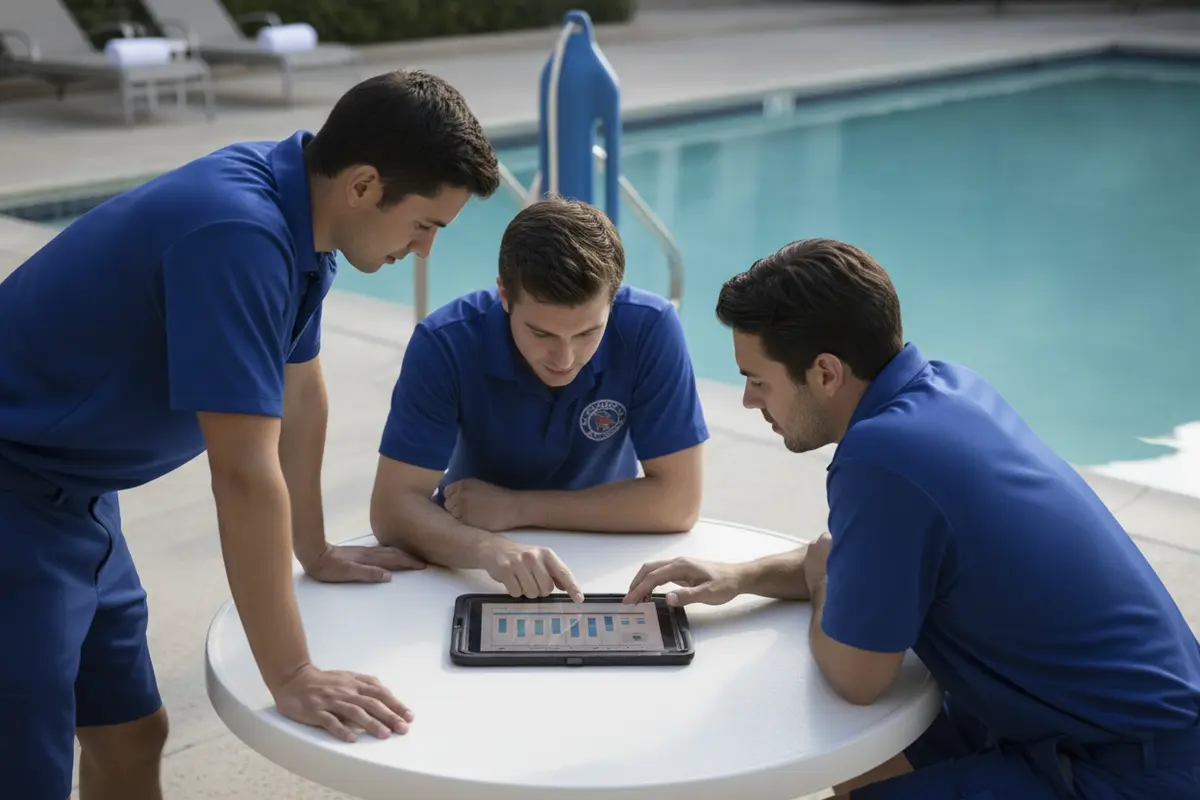
Look for mismatches between expected and actual signals. Staff may expect a wearable vibration but hear a facility alert, or they may receive several notifications with no clear priority. A responder may also be handling another duty when an alert arrives. These observations can lead to focused practice, clearer assignments, or a technical question for the system provider.
Check whether the primary and backup roles are explicit. A plan that says “notify staff” may leave uncertainty about who acknowledges the alert, who responds, and who remains responsible for other swimmers. Make the handoff observable in practice: staff should know who takes each role and how the team confirms that the transfer occurred.
Wave Aquatic Safety positions its wearable system as a force multiplier, not a replacement for lifeguards. Facilities can review the overview of how the system works and ask how alerts would fit their staffing, communication methods, and operating procedures. The facility should assess the actual configuration and train staff to respond according to its own approved plan.
How should supervisors classify alerts with no emergency identified?
Use consistent categories and preserve uncertainty. An alert without an emergency identified may still reveal something about testing, signal recognition, equipment readiness, or the reporting process, so record what happened before assigning a cause.
Facilities may use different terms for alerts that do not correspond to an emergency. Choose local categories that staff can apply consistently, such as confirmed emergency, drill or test, alert with no emergency condition identified, equipment or connectivity issue, and undetermined event. Define each category in the review procedure so the label does not change from one shift to another.
For each non-emergency alert, record the conditions, equipment involved, staff action, and disposition. Note whether it occurred during a planned test, maintenance, swimmer entry, or another known activity. If the evidence does not establish a cause, mark the event as undetermined and assign a follow-up instead of guessing or calling it a false alarm prematurely.
- Was the event expected under the system’s operating design or a scheduled test?
- Did staff know whether to respond, verify, or follow another approved step?
- Could staff distinguish the alert from routine notifications?
- Did an equipment or connectivity check identify a repeatable issue?
- Would a short scenario exercise clarify how the team should respond?
Consider the consequences of an alert category before using it in trend reports. A label such as “false” can hide differences between a planned test, an unexplained signal, and a verified equipment issue. A more descriptive record helps the supervisor find a cause, compare like events, and decide whether staff need practice or technical guidance.
Patterns need context. An increase in recorded alerts may reflect more drills, a change in operations, or improved recordkeeping rather than a change in system quality. Compare events with exposure, operating schedules, system changes, and the facility’s documentation practice. Do not use raw counts alone to judge staff or technology.
When an event appears technical, preserve the relevant details and contact the appropriate support channel under facility procedures. WAVE’s frequently asked questions and support information can help a facility identify the right questions to raise. Record the response and disposition so future reviews do not have to reconstruct the same issue.
What should the written review and follow-up include?
A useful review records the evidence, the limits of that evidence, and a small set of actions that can be checked. Name an owner and due date for each action, then return to the item to confirm that the change happened and staff can use it.
Keep the written review factual and concise enough that the people responsible can use it. Include the event classification, scope, records consulted, timeline, roles, findings, unresolved questions, and decisions. Note whether timestamps are exact or estimated. Protect personal and sensitive information under facility policy, and share only what each reader needs to act.
Separate findings into three useful groups: confirmed observations, possible explanations that need checking, and decisions or changes the facility has approved. For example, a log entry of an alert at 2:12 is an observation. A claim that the responder did not hear it because the pool was loud is a hypothesis until it is verified. Practicing the backup acknowledgment process at the next staff drill is a proposed action.
| Finding. | Specific follow-up. | Evidence it is complete. |
|---|---|---|
| Alert ownership was unclear. | Clarify primary and backup responder roles in the approved procedure. | Updated assignment and staff acknowledgment. |
| Staff were unsure about a signal. | Run a short scenario using the approved response steps. | Practice record and debrief notes. |
| Time sequence could not be reconciled. | Check clock settings and clarify how times are recorded. | Documented check and revised recording instruction. |
| Notification had no confirmed cause. | Review available equipment information and seek technical guidance. | Recorded inquiry and event disposition. |
| Readiness check was incomplete. | Clarify who records the check and when it is performed. | Completed check record and assigned responsibility. |
Make every action specific enough to verify. “Improve communication” is not complete until the team states what will change, who owns it, and how it will be checked. A practical action might be to clarify who acknowledges a wearable signal, rehearse the handoff in a brief staff scenario, and have the supervisor observe whether the team follows the revised procedure.
Set due dates that fit the facility’s schedule and identify who will verify completion. At the next review point, check whether the procedure was updated, staff were informed, equipment checks were completed, and the intended behavior can be demonstrated. If the action did not work as intended, document the result and revise it rather than treating a completed checkbox as proof that the gap is resolved.
Facilities considering digital alerting can compare their response needs with the information about commercial aquatic safety products and the GUARDian Hub. Before making a decision, ask what alerts are available, who receives them, what records can be reviewed, and what training is required. Confirm current product details with the provider rather than assuming that every facility configuration is the same.
Which aquatic facility alert data questions for supervisors guide an alert workflow?
Choose a workflow that staff can understand, practice, and maintain within the facility’s safety program. A useful evaluation considers alert delivery, role assignments, available records, support, and the limits of what technology can determine on its own.
Include the people who will use and oversee the workflow in the evaluation. Aquatic directors can define operational requirements, while frontline staff can identify practical issues such as coverage, signal recognition, and busy-period duties. Risk, operations, and technology teams may help review record handling and system readiness where those functions apply.
Ask for a demonstration or discussion that follows a realistic scenario from signal to response. A product feature list alone does not show whether staff understand the alert or know how to hand off responsibilities. Ask the provider to explain how the signal is delivered, what information is recorded, and which steps remain the responsibility of the facility.
- Which conditions generate a signal, and how does it reach the assigned staff?
- How can staff distinguish an urgent signal from a test or routine notification?
- What orientation, practice, and ongoing readiness checks are needed?
- What event information is recorded, and how can supervisors review it?
- How does the workflow fit the site’s lifeguard coverage and emergency action plan?
- Who should the facility contact if records suggest a technical concern?
Facilities should also ask how the approach fits their physical environment and operating procedures. WAVE describes its wearable, wireless system as suitable for clear and dark or murky water conditions and as deploying without permanent construction. Those are product-positioning statements to validate against the facility’s specific needs and current system configuration; they do not remove the need for active supervision or a tested response plan.
Use the GUARDian Hub overview and the commercial product overview to prepare questions for a site-specific evaluation. A facility can also review information about wearable swimmer equipment and lifeguard alert equipment. Compare answers against the site’s staffing model, response plan, water environment, and ability to maintain the process.
Keep procurement separate from the incident finding itself. A review may reveal that existing roles need clarification, that staff need practice, or that the facility wants to evaluate additional alerting. It should not assume that new equipment alone resolves an operational gap. Make the decision through the facility’s established purchasing and risk review process.
For another operational perspective, see the portable drowning detection guide and the wearable swimmer equipment page. These can support a broader discussion of how alerting and staff response work together. Use site-specific review and current product information before setting requirements.
Consider a simple fictional drill example. A staff member records hearing a facility alert at roughly 3:05, while the system record shows an alert at 3:03. The supervisor should not decide from those two entries alone that the staff member delayed. First, confirm whether the clocks were aligned and whether the note was written during or after the drill. Next, ask the staff member what signal they noticed and what action followed. Check whether another responder acknowledged the alert or whether the drill instructions assigned that role to someone else. Then compare the sequence with the approved plan and note any missing evidence.
If that review shows the signal was heard but the backup role was unclear, fix role clarity. Do not simply tell everyone to respond faster. The facility might clarify the primary and backup assignments in its procedure. It can explain the change in a staff briefing. A short scenario can then confirm that the handoff is understood. The owner can retain the revised instruction and practice record as evidence of completion. At a later check, the supervisor can ask staff to describe the acknowledgment step without prompting and determine whether another clarification is needed.
This example is a process illustration, not a universal response standard. The facility’s own plan and applicable requirements control the actual response. A review should avoid inventing a target response time or imposing a new procedure based only on one uncertain record. The goal is to connect a supported finding to a proportionate action, then verify that the action is understood and workable on the deck.
Frequently Asked Questions
Should every alert be treated as an emergency?
Follow the facility’s written procedures for the signal received. Staff should not dismiss an alert based on an assumption; the response and verification steps should be taught and practiced for the system and site.
Which timestamp is most important to review?
No single timestamp explains the entire response. Compare detection, delivery, acknowledgment, and staff action where records support them, and document clock differences or uncertainties.
How should a supervisor record an alert with no emergency identified?
Use the facility’s consistent event categories, record conditions and staff actions, and document the disposition. If the cause is uncertain, leave it undetermined and assign a follow-up rather than guessing.
Can alert records replace an incident report?
No. System records may support facility documentation, but they do not replace required reports, staff accounts, or the facility’s policies and applicable obligations.
Does alert technology replace lifeguards?
No. Alert technology is an additional layer intended to support staff response in supervised aquatic environments. It does not replace trained lifeguards, active surveillance, emergency planning, or practice.
When should a team review its response process?
Follow applicable requirements and facility policy. Review after relevant events, drills, operational changes, or identified gaps, then assign owners and check that follow-up is complete.
A consistent review turns alert records into clearer procedures, focused practice, and better-informed decisions about how technology fits the facility’s safety program.
