
FREQUENTLY ASKED QUESTIONS
The purchase of a WAVE system is just the beginning of the relationship with our company. Your dedicated WAVE Customer Account Manager is available to answer even the most complex questions regarding how to improve water safety at your aquatics facility.
Below are some of the most frequently asked questions for your convenience.
WAVE Aquatic Safety provides advanced technology solutions designed to help aquatic facilities improve swimmer safety, support lifeguard performance, and strengthen overall aquatic risk management. WAVE offers three complementary solutions: GUARDian Swimmer, GUARDian Lifeguard, and GUARDian VISION.
GUARDian Swimmer – Wearable Drowning Detection
GUARDian Swimmer uses lightweight wireless wearables (Trackers) worn by swimmers to monitor underwater submersion. When a swimmer remains submerged beyond a facility's preset time threshold, the system sends an alert to lifeguards through vibrating Staff Bracelets. If the swimmer remains submerged for an additional preset period, the system can issue a facility-wide Public Warning to activate additional responders.
GUARDian Lifeguard – Lifeguard Emergency Alerts
GUARDian Lifeguard provides an additional layer of protection for lifeguards and facility staff by automatically alerting the Safety Team when a tagged lifeguard enters the water. Using small wireless Lifeguard Tags worn by staff or attached to rescue equipment, the system sends notifications so additional personnel know when a lifeguard is responding to an emergency and can provide support according to the facility's Emergency Action Plan.
GUARDian VISION – AI-Powered Aquatic Monitoring
GUARDian VISION uses camera-based artificial intelligence (AI) technology to monitor activity in and around the water. The system is designed to support swimmer monitoring, lifeguard training, operational oversight, and safety protocol compliance, while providing video-based insights that help facilities evaluate performance and strengthen safety practices.
Together, these solutions help aquatic facilities address multiple aspects of water safety: detecting prolonged swimmer submersion, knowing when a lifeguard enters the water, and using AI-powered technology to support monitoring and staff performance.
WAVE solutions are designed to complement qualified lifeguards, active surveillance, and existing Safety Plans, Standard Operating Procedures (SOPs), and Emergency Action Plans (EAPs)—not replace them.
Even the most experienced and attentive lifeguards are human. Crowded pools, glare, splashing, blind spots, distractions, fatigue, and underwater visibility can make it difficult to recognize a swimmer in distress.
Drowning is often silent and can happen quickly. A person experiencing distress may not splash, wave, or call for help. In some cases, a submerged swimmer can be difficult to distinguish from someone swimming underwater or playing.
WAVE adds an additional layer of protection by monitoring swimmers and detecting prolonged submersion. When a swimmer exceeds the facility's preset threshold, GUARDian alerts lifeguards so they can investigate and respond.
WAVE is designed to work alongside trained lifeguards, not replace them. It helps address one of the most challenging parts of a rescue: recognizing that someone may be in trouble before valuable time is lost.
WAVE was developed through collaboration among product designers, engineers, aquatic safety professionals, aquatic directors, and lifeguards. The technology has evolved through multiple generations of development and is used at aquatic facilities across the United States and the world.
WAVE uses patented and patent-pending technologies and has received industry recognition, including Most Valuable Product honors from Aquatics International, recognition as a World Changing Idea by Fast Company, and an international iF Design Award.
The system has also received coverage from major media organizations, including ABC, CBS, NBC, and FOX.
WAVE is supported by water safety advocates and organizations working to advance aquatic safety.

WAVE is designed for a wide range of aquatic environments, including:
- Indoor and outdoor swimming pools
- Waterparks and recreational aquatic facilities
- Lakes and ponds
- Beaches and waterfronts
- Seasonal and temporary swimming programs
GUARDian uses wireless wearable technology rather than relying on underwater cameras. This allows it to operate in environments where water clarity, color, glare, vegetation, bubbles, or changing water conditions can make camera-based monitoring challenging.
WAVE equipment is designed for weather-resistant operation and can be deployed as a permanent or portable system, depending on the facility's needs.
WAVE offers two complementary approaches to aquatic safety: wearable-based swimmer monitoring and AI-powered camera technology.
WAVE GUARDian – Wearable Drowning Detection
GUARDian uses lightweight wireless Trackers worn by swimmers. When a swimmer remains submerged beyond a preset time, the system sends alerts to lifeguards through Staff Bracelets. Additional alerts can notify the broader facility if the swimmer remains submerged.
GUARDian works in clear and dark water and is designed for pools, lakes, ponds, waterfronts, and other aquatic environments. It can also alert facility staff when a tagged lifeguard enters the water for a rescue.
WAVE VISION S.M.A.R.T. – AI-Powered Camera Technology
VISION S.M.A.R.T. uses camera-based artificial intelligence to monitor activity in and around the water. It is designed to support swimmer monitoring, lifeguard training, operational oversight, and safety protocol compliance.
The platform also provides video-based insights and event information to help aquatic managers review activity and improve staff performance.
Which solution is right for your facility?
The best solution depends on your environment, operational priorities, and safety requirements. WAVE can help evaluate your facility and determine which technology, or combination of technologies, is the best fit.
WAVE systems are designed to be deployed quickly, with minimal disruption to facility operations.
Unlike systems that require extensive construction or underwater camera installation, GUARDian is largely plug-and-play. Most facilities do not need divers, licensed contractors, or major modifications to their pools or surrounding infrastructure.
There is typically no need to modify pool decks, gutters, filtration systems, or lighting systems.
For permanent placement, equipment can be mounted on walls, poles, desktops, or other suitable locations. Some minor drilling may be required to mount wall brackets. The system requires appropriate power connections, with GFCI-protected outlets wherever electrical connections are near water.
WAVE can also be configured as a portable system for seasonal facilities, off-site programs, and special events.
A WAVE GUARDian Hub is designed to monitor large groups of swimmers and can provide wireless coverage of up to 700+ feet, depending on the facility layout and environmental conditions.
Additional monitors and equipment can be integrated when a facility needs to accommodate more swimmers or extend its coverage area.
Because wireless performance can vary based on environmental conditions, building materials, equipment placement, and other factors, WAVE works with each facility to determine the appropriate system configuration.
Contact WAVE to discuss your swimmer capacity, pool layout, and coverage requirements.
Yes. WAVE systems can be configured to accommodate changing facility needs.
Facilities can add compatible accessories, such as Exit Detectors, additional Monitors, and Location Indicators, as operational requirements evolve.
Your WAVE Customer Account Manager can help determine which additional components are appropriate for your existing system.
Yes. WAVE GUARDian uses wireless wearable technology rather than relying on cameras to see swimmers underwater.
Because the system monitors the wearables rather than depending on visual water clarity, it is designed to operate in clear, dark, cloudy, and otherwise challenging water conditions.
This makes GUARDian suitable for environments such as indoor and outdoor pools, lakes, ponds, and waterfronts where visibility can vary.
WAVE GUARDian uses a two-stage alert process designed to notify lifeguards first and bring in additional responders when needed.
Guard Warning
When a swimmer remains submerged beyond the facility's preset maximum time, the swimmer's Tracker triggers a Guard Warning. Lifeguards wearing WAVE Staff Bracelets receive a discreet vibration alert.
The bracelets are designed to notify guards without requiring them to look at a screen or take their eyes away from the water.
Public Warning
If the swimmer remains submerged for an additional preset period, the WAVE Hub can issue a Public Warning using audio and visual notifications, including flashing LEDs, audible tones, and configurable spoken announcements.
This second alert is designed to bring additional facility personnel into the response.
A Guard Warning should be treated as a call to action, not simply an advance notification. Lifeguards should follow their facility's Emergency Action Plan immediately rather than waiting for a Public Warning.
Each facility determines its Guard Warning and Public Warning thresholds using the available WAVE system settings.
Some facilities may choose a shorter submersion threshold, such as 15 seconds, while others may select a longer interval, such as 30 seconds.
WAVE recommends that no swimmer, regardless of age or swimming ability, remain submerged for more than 30 seconds. Facilities should establish their settings in consultation with their aquatic safety leadership and applicable operating procedures.
The settings can be adjusted as a facility gains experience with the system and evaluates its operational requirements.
Alert timing is an important part of a facility's overall emergency response plan.
The Model Aquatic Health Code (MAHC) addresses lifeguard surveillance zones and states that a qualified lifeguard should be able to reach the furthest extent of their assigned surveillance zone within 20 seconds.
That response time begins after an emergency has been recognized. When a swimmer is submerged, the time required to recognize the situation is already part of the emergency timeline.
WAVE is designed to help reduce the time between prolonged submersion and recognition by providing an additional alert to lifeguards.
Facilities should select alert thresholds that support their specific surveillance zones, staffing, rescue procedures, and response-time requirements. WAVE does not replace active scanning or the need to meet applicable lifeguard training and certification standards.
The WAVE GUARDian Lifeguard Alert feature notifies facility personnel whenever a tagged lifeguard enters the water.
Lifeguards wear small wireless Lifeguard Tags attached to their clothing, rescue tubes, rescue equipment, or lanyards.
When a tagged lifeguard enters the water, the system sends audio and visual notifications to designated areas of the facility. Depending on the system configuration, notifications can also be delivered to compatible Android and iOS mobile devices.
This feature helps facility personnel recognize when a lifeguard has entered the water for a rescue, allowing additional team members to respond according to the facility's Emergency Action Plan.
The Lifeguard Alert feature is included with WAVE GUARDian systems and may also be available as a standalone solution.
No. WAVE is designed to support qualified lifeguards, not replace them.
Lifeguards remain responsible for active patron surveillance, recognizing emergencies, and executing their facility's Emergency Action Plan.
WAVE adds another layer of protection by monitoring swimmers and providing alerts when a swimmer remains submerged beyond the facility's preset threshold.
The system is designed to integrate into existing Safety Plans, Standard Operating Procedures (SOPs), and Emergency Action Plans (EAPs), with minimal disruption to normal operations.
WAVE is designed to complement, not replace, active lifeguard surveillance.
The system provides an additional alert mechanism that can help lifeguards recognize a potential emergency sooner. It does not remove the need for scanning, vigilance, training, or compliance with facility procedures.
WAVE customers have reported that the technology can help their teams feel more supported and engaged in their safety responsibilities.
As with any safety technology, facilities should reinforce through training that every alert requires an appropriate response and that lifeguards must continue their normal surveillance duties.
WAVE is designed to integrate into existing aquatic operations without adding significant daily responsibilities.
Swimmers collect and return their Trackers using designated storage racks. Staff can distribute and collect the wearables, or swimmers can manage the process themselves, depending on the facility's procedures.
Lifeguards wear Staff Bracelets and continue their normal surveillance responsibilities. The system requires a brief functional check before opening and routine charging of rechargeable equipment as needed.
Facilities should incorporate WAVE alerts into staff orientation, in-service training, and emergency drills, just as they would other safety equipment and procedures.
The goal is to add another layer of protection without making daily operations unnecessarily complicated.
WAVE Trackers are designed to be lightweight and comfortable so swimmers can wear them during normal aquatic activities.
In facilities using the system, many swimmers quickly become accustomed to wearing their Trackers and often forget they have them on.
The wearable design is intended to accommodate normal swimming activities, including swimming with goggles and swim caps.
If a Tracker comes off, it is designed to float, making it easier to retrieve and put back on.
WAVE offers wearable storage options designed to make distributing, collecting, and organizing Trackers simple for facility staff and swimmers.
Two storage options are available:
- Freestanding storage rack: A movable option that can be positioned where it is most convenient for swimmers and staff.
- Wall-mounted storage rack: A permanent storage option for facilities that prefer a fixed location.
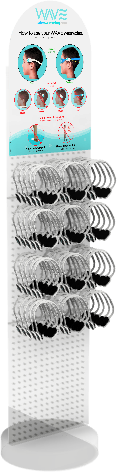
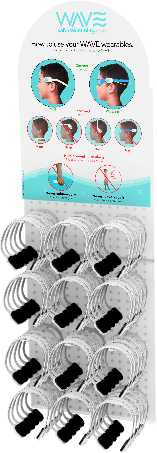
After swimmers become familiar with the process, collecting and returning Trackers can become a routine part of their visit.
WAVE wearables should be cleaned regularly, particularly when they are shared among swimmers.
For routine cleaning, use gentle soap and water. For more thorough cleaning, follow WAVE's current approved cleaning and disinfection instructions.
Avoid harsh or undiluted cleaning chemicals that may damage the wearable materials. Always follow the manufacturer's instructions for any disinfectant being used.
Facilities should establish cleaning procedures that are consistent with their health and safety policies and applicable public health recommendations.
As with other shared athletic equipment, wearables should be cleaned and disinfected regularly when used by multiple people.
Use cleaning products and methods approved for the wearable materials, and follow the product manufacturer's instructions.
WAVE wearables contain sealed batteries designed to provide approximately 18 to 24 months of service, depending on usage.
Battery life estimates are based on approximately eight hours of activated use per day. Actual battery life will vary depending on how frequently the wearable is used.
The WAVE system provides wearable battery-status information and can notify facility staff when a Tracker needs attention.
Under the GUARDian COMPLETE Subscription, eligible Swimmer Trackers are replaced at no additional charge when their batteries are depleted, subject to the applicable return and replacement terms.
When the lights on the WAVE Hub turn pink and eventually red, the Hub's battery is running low.
This usually means the Hub has lost its main power source, most often because the GFCI outlet it is plugged into has tripped or the Hub has been unplugged.
Please restore power to the Hub as soon as possible by resetting the GFCI outlet or plugging the Hub back in. If the issue continues after power is restored, contact WAVE Customer Service at support@wavedds.com.
WAVE Trackers are designed to be comfortable enough that swimmers may occasionally forget to remove them when leaving the aquatic area.
Optional Exit Detectors and additional Monitors can help facilities identify when a swimmer leaves the designated swimming area while still wearing a Tracker.
Additional monitoring coverage can also be configured for areas such as locker rooms, bathrooms, and other spaces swimmers may visit after leaving the pool.
These options help reduce unnecessary alerts and support more reliable system operation.
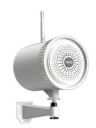
WAVE wearables use Bluetooth Low Energy (BLE), a low-power wireless communication technology commonly used in consumer electronics and connected devices.
The devices are designed to transmit brief, low-power signals to communicate with the WAVE system.
For detailed information about device specifications, battery safety, and wireless emissions, facilities can request the applicable technical documentation from WAVE.
WAVE believes that advanced aquatic safety technology should be accessible to facilities of different sizes and budgets.
System pricing depends on factors such as facility size, swimmer capacity, coverage requirements, equipment configuration, and subscription options.
WAVE offers subscription-based solutions designed to make commercial drowning detection technology more accessible without requiring every facility to make a large upfront equipment investment.
To discuss your facility's needs and request an estimate, schedule a Free Consultation.
The portal allows prospective customers to explore their options and determine whether a WAVE solution may be appropriate for their facility, without an obligation to purchase.
Yes. WAVE recognizes that budget constraints can make it challenging for some facilities to invest in additional aquatic safety technology.
Some facilities have successfully used private or corporate sponsorships, grants, and other funding opportunities to cover or offset the cost of deploying WAVE.
Depending on the facility and circumstances, WAVE may also be able to discuss alternative financing arrangements, refurbished equipment, or other purchasing options.
If your facility is interested in WAVE but has budget limitations, contact our team to discuss potential solutions:
Getting started begins with understanding your facility's aquatic environment, swimmer capacity, safety priorities, and operational requirements.
WAVE can help you evaluate your needs, determine which solution is most appropriate, and configure a system that fits your facility.
You can begin by exploring the self-service quoting portal:
https://quotes.saferswimming.com
You can also contact the WAVE team directly to discuss GUARDian, VISION S.M.A.R.T., or other aquatic safety requirements.
Your dedicated WAVE Customer Account Manager can help with system configuration, deployment, staff onboarding, and ongoing support.
WAVE is more than a product purchase. It's an ongoing partnership focused on helping your facility improve aquatic safety.