
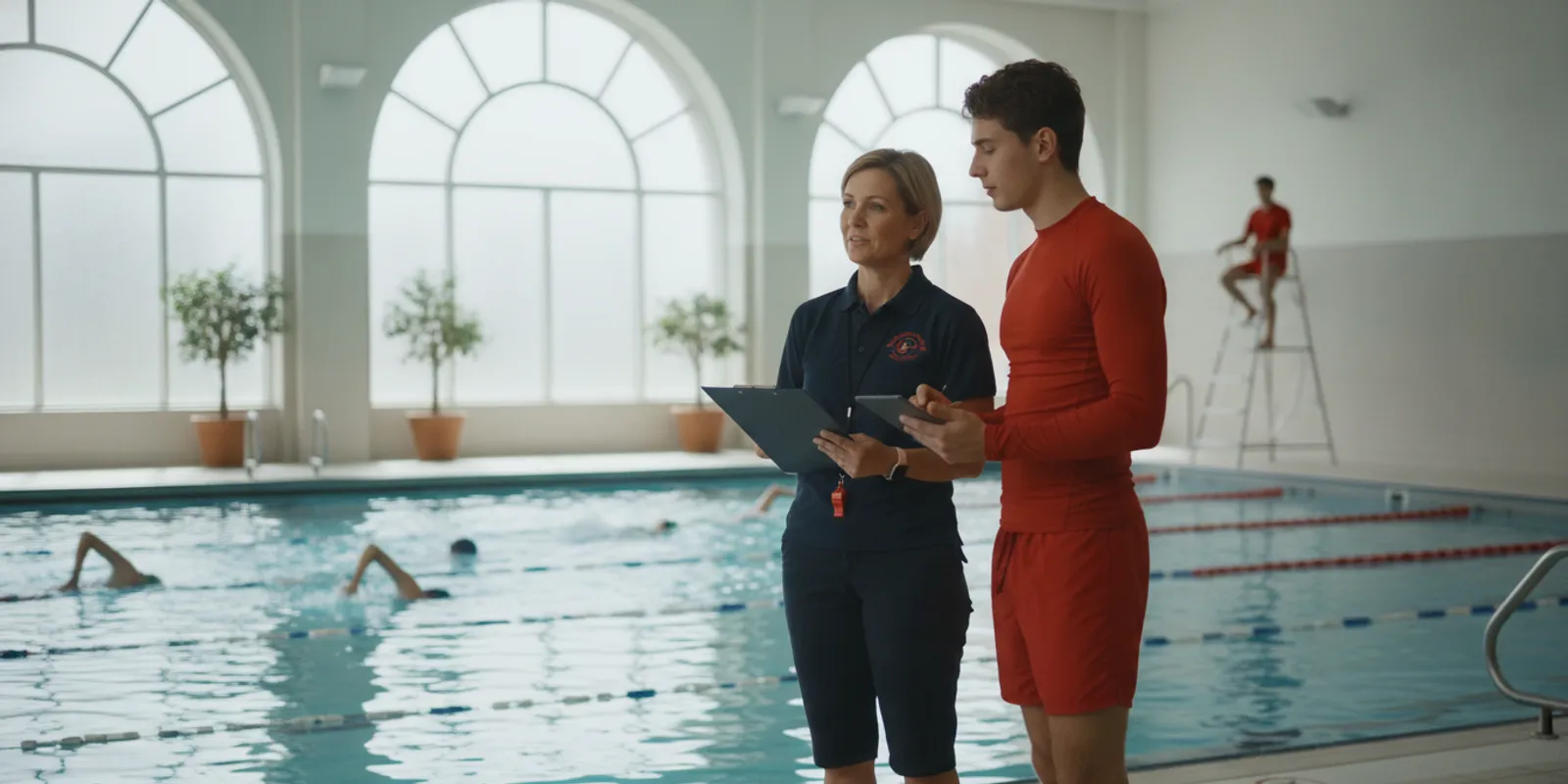
An aquatic incident documentation guide should give facility leaders a repeatable way to record what happened, what staff observed, how the response unfolded, and what still needs review. After an alert or other safety event, the record should distinguish direct observations from device output, witness accounts, and later conclusions. Careful documentation supports an informed review; it does not replace attentive supervision or the facility’s emergency procedures.
A useful incident record answers six questions: what happened, when and where it happened, who was involved, what staff did, what the system reported, and what follow-up is assigned. Record facts promptly, preserve original details where policy permits, and clearly mark anything that remains unconfirmed.
What should an aquatic facility document after an incident?
Begin with the facility’s approved reporting form and process. The same basic record structure can help with a confirmed incident, near miss, unexpected alert, or equipment concern, but the event type should be labeled accurately. Document enough context for a reviewer who was not present to understand the sequence without adding speculation or unnecessary personal information.
Identify the event with the date, facility area, event category, report author, and report creation time. Note whether the report is an initial account or a later addendum. If some details are not yet known, write “unknown” or “pending confirmation,” then assign a person to verify them. An unexplained blank can be mistaken for an oversight, while an explicit unknown tells the reviewer that the question remains open.
Separate different sources of information. A staff member’s direct observation, a witness’s account, a device display, an automatically generated log, and a later inference are not interchangeable. For example, “the supervisor saw an alert on the hub at about 2:14 p.m.” identifies an observation and an approximate time. “The alert proves the swimmer was in distress at 2:14” goes beyond that observation unless other evidence establishes it.
Use the facility’s approved process to gather the relevant documents and preserve their provenance. A written report should not silently replace a source log or another person’s statement. When correcting an entry, follow the organization’s method, such as a dated addendum that identifies who made the change and why. Keep the original account traceable rather than overwriting it.
WAVE describes its GUARDian system as an additional layer of support that can alert staff. Facilities evaluating a documented response workflow can review the GUARDian Hub information alongside their own policies. A system description is not a substitute for incident evidence, and the facility’s own approved reporting process should govern the record.
Start with event identity, report ownership, and clearly labeled sources. Use plain facts, mark gaps instead of guessing, and retain the original material according to facility policy so a later reviewer can distinguish what was known at the time from what was learned afterward.
Which timeline details help explain the response?
A timeline lets a reviewer follow the event from the first indication through the immediate response and subsequent checks. Capture significant times, but also name where each time came from. A time shown in a system log, a wall clock, a radio record, and a witness’s memory may differ; the goal is to preserve that difference and understand it, not to make every entry appear identical.
Record the date and time zone or local-time convention used by the facility. For each event, mark a time as exact, approximate, or unknown. If a responder remembers an event as “around 2:15,” do not convert it into a precise timestamp without evidence. If the report was written later, record when it was completed and, when useful, why the account was delayed.
- Initial indication: When an alert appeared, someone noticed a concern, or a report was received, and the source of that information.
- Acknowledgment: When an assigned staff member recognized or confirmed receipt of the alert, if known.
- Response: When staff began the relevant action and reached the area, if those times are available.
- Key changes: When staff requested help, changed roles, communicated a decision, or transferred responsibility.
- Resolution: When the immediate response ended and who confirmed the status.
- Follow-up: When equipment checks, notifications, debriefing, and report completion occurred.
Use synchronized clocks where the facility can reasonably do so, but preserve source records as they are. If one log records an alert at 2:14 and a staff account says 2:16, include both source times and flag the difference for review. A reviewer can check clock settings, synchronization, and how the times were recorded. Editing one value simply to make the timeline look consistent removes information that may matter.
Consider a hypothetical example: a wearable notification is logged at 2:14, a staff member reports hearing a facility alert at about 2:15, and the supervisor’s written note places the first check at 2:17. A good report does not assert that all three events occurred at exactly the same minute. It identifies each source, the level of precision, and any remaining question, such as whether the displayed clocks were synchronized.
Do not treat a difference between alert time and arrival time as proof of an individual performance issue. The record may not yet explain overlapping duties, communication conditions, the alert’s location information, or whether the event was confirmed. Document the available evidence first. During review, ask what information each role had at each point and whether the facility’s process made the next action clear.
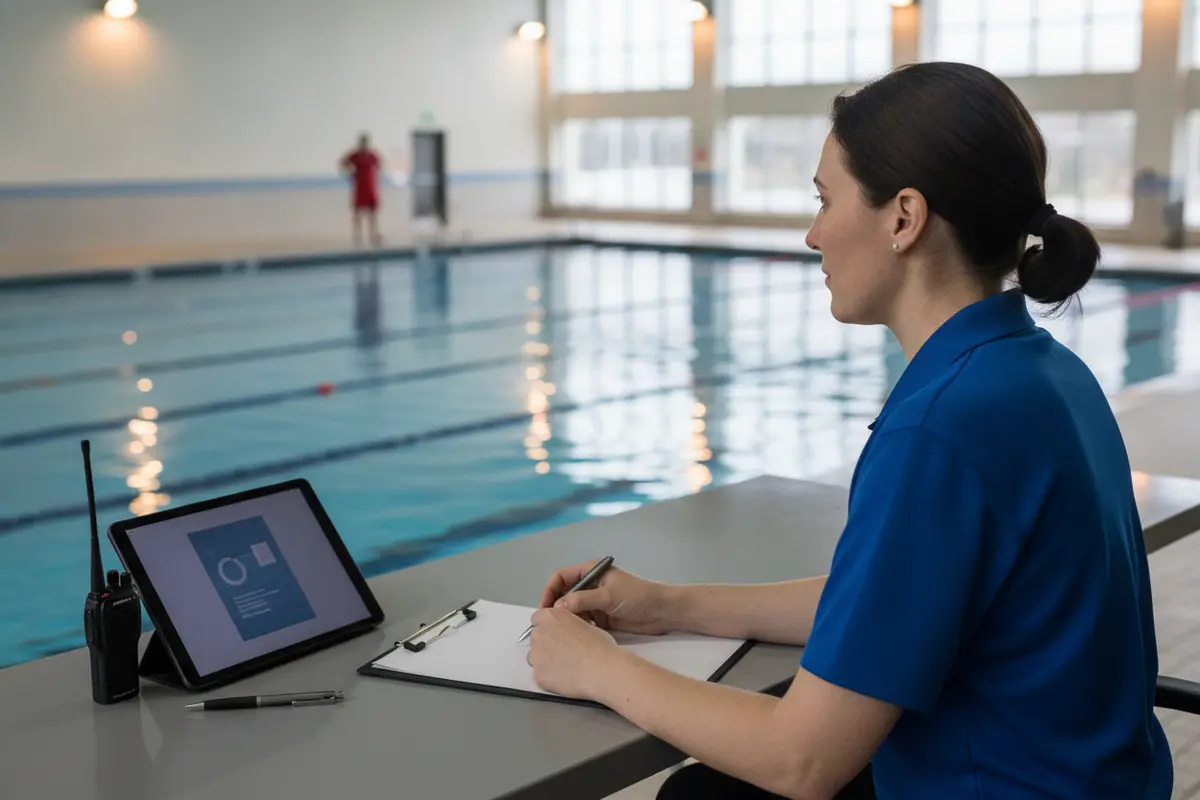
Build the sequence from original sources, identify each source beside its time, and label estimates. Keep discrepancies visible for review. A reliable timeline is one that reflects the evidence and its limits, rather than one that looks precise because uncertain details were silently changed.
How should staff actions and roles be recorded?
List the roles involved and the actions relevant to understanding the event. Depending on the facility and incident, that might include a responding lifeguard, supervisor, front-desk employee, security staff member, or outside responder. Use identifiers consistent with facility policy and limit personal details to what the authorized record requires.
Describe what each person did in neutral, concrete language. “Acknowledged the alert and checked the west side of the pool” is more useful than “responded poorly.” If a concern about procedure emerges, keep the factual narrative separate from the review’s analysis and identify the evidence behind the concern. The initial report should not ask a staff member to make a medical, legal, or technical conclusion outside their role.
Record communication and handoffs. Note who passed information to whom, how it was communicated, and whether the recipient confirmed receipt, when known. If a supervisor took over coordination or a responder was reassigned, record the approximate time and what changed. This gives the reviewer a way to trace how responsibility and information moved through the team.
Where wearable alerts or lifeguard equipment are involved, identify the equipment and the alert path as accurately as available records allow. WAVE describes wearable sensors that can detect prolonged submersion or lifeguard water entry and alert staff through vibrating bracelets and facility alerts. A facility can examine its own alert and response procedures alongside WAVE’s lifeguard alert equipment information and swimmer equipment information. No technology replaces attentive human supervision.
Use separate accounts when people recall different details. Ask each person to record what they personally observed, heard, or did, rather than trying to reconcile memories in a group narrative before the facts are collected. If accounts conflict, note the difference and let the authorized reviewer decide whether further inquiry is appropriate. Avoid implying that disagreement means one account is dishonest.
Record the role, action, approximate time, and communication source. Keep direct observations distinct from judgments and preserve meaningful differences between accounts. This creates a reviewable record without assigning blame before the facts have been checked.
What system details belong in the incident record?
When technology is part of an event, document what it reported and the system condition that was known at the time. Include the system or device name, relevant unit identifier if available, alert type, displayed message or notification, and whether the alert was acknowledged or cleared. Preserve the original log or image through an approved method when policy permits instead of relying only on a paraphrase.
Record operational context that may affect interpretation. Note whether a component was reported offline, whether a test or maintenance activity was underway, and whether a staff member had already reported an issue. If the condition has not been confirmed, label it as unknown and assign a follow-up check. Do not state that a device caused or prevented an outcome unless an appropriate review establishes that conclusion.
Keep system facts separate from response facts. A log may show when an alert was generated; by itself, it may not establish what a staff member saw or what happened in the water. A staff account can describe an observation without explaining why a device generated a notification. Preserving both records with their sources gives a reviewer a more complete basis for inquiry.
Where available, document how the alert reached staff: a wearable notification, hub display, audible alert, radio relay, or another approved channel. Record whether a person acknowledged it, if the system records that information, and whether any follow-up check was performed. Do not assume the person who received a notification also saw every detail shown elsewhere in the system.
Facilities can consult the WAVE FAQ and support information for product-related context, while retaining facility records and local procedures as the authority for incident reporting. Product pages can explain a system’s intended functions; the event record should describe what the facility actually observed and verified.
Preserve the system’s own output, the known operating status, and staff accounts as separate sources. Identify unknowns and avoid causal claims based only on an alert record. The point is to document evidence in a form that can be checked later.
How can a facility make an incident report useful?
A consistent form helps staff capture comparable information without forcing every event into the same narrative. The form should prompt for basic facts, source records, key communication, system status, and open questions. It should allow “not applicable” or “unknown” where those answers are accurate and make clear who will follow up.
The table below is a starting framework, not a substitute for a facility’s approved reporting rules. Adapt the fields to the organization’s emergency action plans, privacy procedures, record-retention schedule, and applicable requirements. If a new form is being considered, have the responsible leaders review it before staff use it.
| Record section | What to capture | Possible source | Review check |
|---|---|---|---|
| Event identity | Date, location, category, report author, creation time | Facility incident form | Can an authorized reviewer identify the event and record owner? |
| Timeline | Alert, acknowledgment, response, handoff, resolution, follow-up | System log, radio record, staff account | Are sources and approximate times labeled? |
| People and actions | Roles, observations, decisions, actions, communications | Separate statements and supervisor notes | Are facts distinct from interpretation? |
| System status | Alert details, identifiers, acknowledgment, outages, tests, known issues | Original logs, maintenance notes | Is the source preserved and identified? |
| Notifications | Who was notified, when, how, and whether receipt was confirmed | Call, radio, or notification record | Were required contacts made under policy? |
| Follow-up | Open question, assigned owner, due date, completion check | Action tracker or review notes | Can the facility verify completion? |
Keep the report readable. Use direct quotations only when they add needed context and mark them clearly. If someone submits a separate statement, retain it under the approved process rather than copying it into the report as though the report author wrote it. If an error is discovered later, use the facility’s documented correction method and leave a trace of the change.
A practical review checklist can be short: Is the event identifiable? Does each key time have a source? Are estimates and unknowns marked? Are original records preserved as required? Are notifications recorded? Does every open action have an owner and next step? If an answer is no, assign a task instead of filling a gap with an assumption.
A useful form guides staff through event identity, a sourced timeline, roles and actions, system condition, notifications, and follow-up. It supports a complete account while reserving technical, clinical, and legal conclusions for appropriately authorized reviewers.
How can managers review records for useful patterns?
Individual reports describe events; periodic review can help managers identify process questions that deserve attention. The goal is not to assume that a recurring field or alert caused an outcome. Instead, check whether records are complete, whether handoffs are clear, whether unresolved equipment questions were closed, and whether staff can follow the reporting process.
Choose a review scope and interval that fit the facility’s policies and event volume. An authorized reviewer might check a defined set of reports for missing fields, repeated unknowns, unclear alert sources, inconsistent time labels, or overdue actions. Keep the scope proportionate and do not create a separate collection of personal details without an approved purpose, access rules, and retention plan.
Before treating an apparent pattern as meaningful, check how records were made. Did the facility change its form or event definitions? Were the times drawn from comparable clocks? Did a staffing change, operating schedule, or procedure update affect what was recorded? If the underlying documentation is inconsistent, the apparent pattern may reflect the recordkeeping method rather than a change in the events themselves.
- Are key fields consistently missing or left unexplained?
- Do records identify the source of each important timestamp and alert?
- Are notifications and handoffs described clearly enough to follow?
- Do corrective actions have an owner, due date, and completion check?
- Were approved procedure or training changes communicated to the affected team?
When a question appears, return to the original sources and involve staff who use the process. For example, if several reports lack acknowledgment times, ask whether the form prompt is clear and whether staff have a reliable way to record that detail. A focused improvement could be revising the prompt, clarifying the assigned role, or adding a check to an existing review. Document who approved the change and how the facility will determine whether it was adopted.
Not every review needs to result in a process change. If the evidence does not justify one, record what was reviewed and why the facility chose not to act. If a change is made, set a date to revisit it and check whether the new procedure is understood in practice. This prevents a recommendation from being treated as complete merely because it was written down.
Use patterns to frame questions, then verify them against original records and staff experience. Document both the reasoning for a change and how its implementation will be checked; an apparent pattern is a prompt for inquiry, not proof of cause.
How should privacy, review, and follow-up work?
After the immediate response, assign an authorized person to confirm that required records have been collected and stored appropriately. The review can check completeness, identify conflicting details, and separate questions that can be answered from those that remain unresolved. Follow the organization’s procedures and applicable requirements for access, retention, escalation, and correction.
Limit access to people with a legitimate role in the review. Avoid distributing names or sensitive details in broad staff communications when they are not needed. If an incident is used later as a training example, obtain the required approval and protect identifying information under the organization’s privacy process. Keep sensitive material in authorized systems rather than informal messages.
Turn review findings into specific actions. “Improve communication” is difficult to verify. A more useful action might be to confirm the approved radio phrase, clarify which role acknowledges an alert, or schedule a review of the timestamp process. Assign an owner, due date, and completion check, and have responsible leaders approve any procedure changes before they are shared with staff.
Retention requirements depend on the organization and applicable law, so a general article cannot set a universal deadline. Ask the person responsible for records, risk management, or legal review when the appropriate schedule is unclear. For broader public-health context, the Centers for Disease Control and Prevention provides information about health and water safety; local requirements and the facility’s approved policies govern its incident records.
Close the loop by linking a follow-up record to the original event without replacing it. Note what was checked, what remains pending, and who confirmed completion. Where relevant, facilities can examine WAVE’s aquatic safety product information or pricing information as part of a separate system evaluation, without treating product material as a substitute for source records or policy.
Protect sensitive information, preserve the original report, and assign every approved follow-up action to an owner with a deadline and verification step. Document what the review supports and what remains uncertain, without overstating the evidence.
What is a practical documentation workflow?
A short sequence makes the documentation process easier to repeat. Staff should follow the facility’s emergency action plan and address immediate safety needs first; recordkeeping must not distract responders from those duties. Once appropriate, identify a report owner and begin collecting factual details and source material.
- Prioritize the response: Follow established procedures and assigned roles before turning to administrative documentation.
- Open the event record: Enter the event identity, location, report owner, and initial information source.
- Build a sourced timeline: Capture significant events, name each time source, and label estimates.
- Gather separate accounts: Preserve staff observations, witness reports, and system output as distinct materials.
- Check system context: Record confirmed equipment status and assign verification for unresolved questions.
- Record communications: Note relevant notifications, recipients, times, and confirmation where known.
- Route and review: Send the record through the authorized process and track corrections or open questions.
- Close follow-up: Assign actions, owners, deadlines, and a way to verify completion.
Before closing the report, ask whether another authorized reviewer could understand the sequence without being present. Confirm that the record distinguishes exact times from estimates, names the source of significant details, identifies unresolved questions, and preserves original logs under policy. If a detail cannot be confirmed, leave it labeled as unknown and assign an appropriate follow-up rather than inventing certainty.
Facilities comparing safety workflows can review WAVE Aquatic Safety’s company information, its consultation and getting-started page, and customer perspectives as part of their own evaluation. A facility should assess any proposed tool against its staffing model, approved procedures, and operational needs. Technology can support staff response; it does not stand in for lifeguards or an emergency action plan.
Frequently Asked Questions
Who should complete the initial incident report?
The facility should assign an authorized report owner under its policy, often a supervisor or a designated staff member. Responders should prioritize immediate duties and provide their own factual accounts when requested. The report owner can organize source materials while preserving who supplied each detail.
Should staff document an alert if no incident is confirmed?
Follow the facility’s policy for unconfirmed alerts and near misses. Record the alert source, acknowledgment, staff check, known system status, and outcome. Label the event as unconfirmed when the available evidence does not establish that an incident occurred.
What if staff and system timestamps do not match?
Preserve each original time, identify its source, and mark whether it is exact or estimated. Do not alter entries merely to make them agree. An authorized reviewer can check clock settings and other available evidence during follow-up.
How should a facility document an equipment issue?
Record the equipment identifier if available, the observed issue, when it was noticed, who was notified, and actions taken under facility procedures. Preserve relevant logs or maintenance records and assign someone to verify unresolved status. Avoid attributing an outcome to the issue unless an appropriate review supports that conclusion.
How long should incident records be retained?
Use the organization’s records policy and applicable legal or regulatory requirements. Retention periods vary, so consult the person responsible for records, risk management, or legal review when the correct schedule is unclear.
Can an incident report be used for staff training?
It may inform training when the organization authorizes that use and protects sensitive information. Use de-identified details where appropriate, focus on procedures and readiness, and follow internal approvals before sharing incident information beyond the review team.
A complete record does not guarantee a particular outcome, but it gives a facility a more dependable basis for review and improvement. Keep the account factual, preserve its sources, and make each follow-up action specific enough to verify.
