Seasonal openings and staffing changes can make established routines harder to deliver consistently. A strong aquatic safety technology multilingual staff training plan starts by identifying what each person must understand, how they will communicate during an alert, and how each procedure will be practiced. For aquatic directors and risk leaders, preparation means reviewing daily routines alongside any tools intended to support them.
Build seasonal training around demonstrated understanding, not just completed orientation. Use shared procedures, clear alert language, hands-on practice, and a supervisor who checks that each person can explain or demonstrate the assigned action. Technology can add an alert layer, but it does not replace attentive lifeguards or a facility-specific emergency action plan.
What should a seasonal safety plan prepare staff to do?
A seasonal plan turns broad expectations into steps staff can carry out on shift. It should reflect the facility's operating schedule, water environment, staffing pattern, swimmer groups, and response structure. When a season changes, leaders should check whether staff know where procedures are kept and who can answer questions that fall outside a training example.
Start with the approved emergency action plan and operating procedures. Identify what changes with the season: opening and closing duties, staff handoffs, areas in use, activity schedules, and assigned response roles. Returning staff may need a refresher, and new employees should not be expected to infer a procedure by watching a colleague.
Make safety-critical instructions observable. Instead of saying only “respond to an alert,” specify the first action, who maintains supervision of other swimmers, how the incident is communicated, and who contacts emergency services under the facility's plan. Follow approved procedures and local requirements; training materials should point to those sources rather than invent response rules.
- Orient: Show staff operating areas, communication tools, emergency equipment, and the location of current procedures.
- Demonstrate: Have a qualified lead model each routine, including handoffs between roles.
- Practice: Use short scenarios and ask staff to perform assigned actions, not only repeat a phrase.
- Confirm: Ask each person to explain the steps in their own words or demonstrate them.
- Revisit: Add a check when schedules, assignments, equipment, or conditions change.
Before opening or shifting to a new schedule, compare planned assignments with the roster. Include new hires, temporary staff, volunteers, substitute supervisors, and employees who cover only selected shifts. Name the person responsible for each briefing. “Someone will cover it” is difficult to verify and easy to miss during a busy transition.
For general public-health information about water safety, consult the Centers for Disease Control and Prevention, then apply the facility's approved procedures and local guidance. General information is not a substitute for facility-specific emergency protocols, qualified instruction, or legal advice.
How can facilities make multilingual training understandable?
Language access is a practical training need, not an assumption about an employee's ability. Someone may converse comfortably in one language but need critical instructions explained differently, or understand written procedures but need practice with spoken alert phrases. Ask what helps each person learn and confirm understanding of the task itself rather than judging by accent, fluency, or confidence.
Begin with tasks that must be understood without ambiguity. These may include who is responsible for surveillance, how to call for help, how an alert reaches the response team, how to hand off responsibility, and where to find the emergency action plan. List the facility's exact terminology and avoid competing names for the same alert, place, or role.
Use plain sentences. Put one action in each instruction, use consistent role names, and explain abbreviations. A translated document may help, but translation by itself does not show that someone can carry out a response. Pair written guidance with demonstration, questions, and a practice scenario that fits the person's role.
When a language need is identified, select an appropriate way to explain and verify the procedure. Options may include a qualified interpreter, a translated resource reviewed by a competent speaker, or another method approved by the organization. Do not treat unverified machine translation as authoritative emergency guidance. Follow organizational policies for technical or sensitive interpretation.
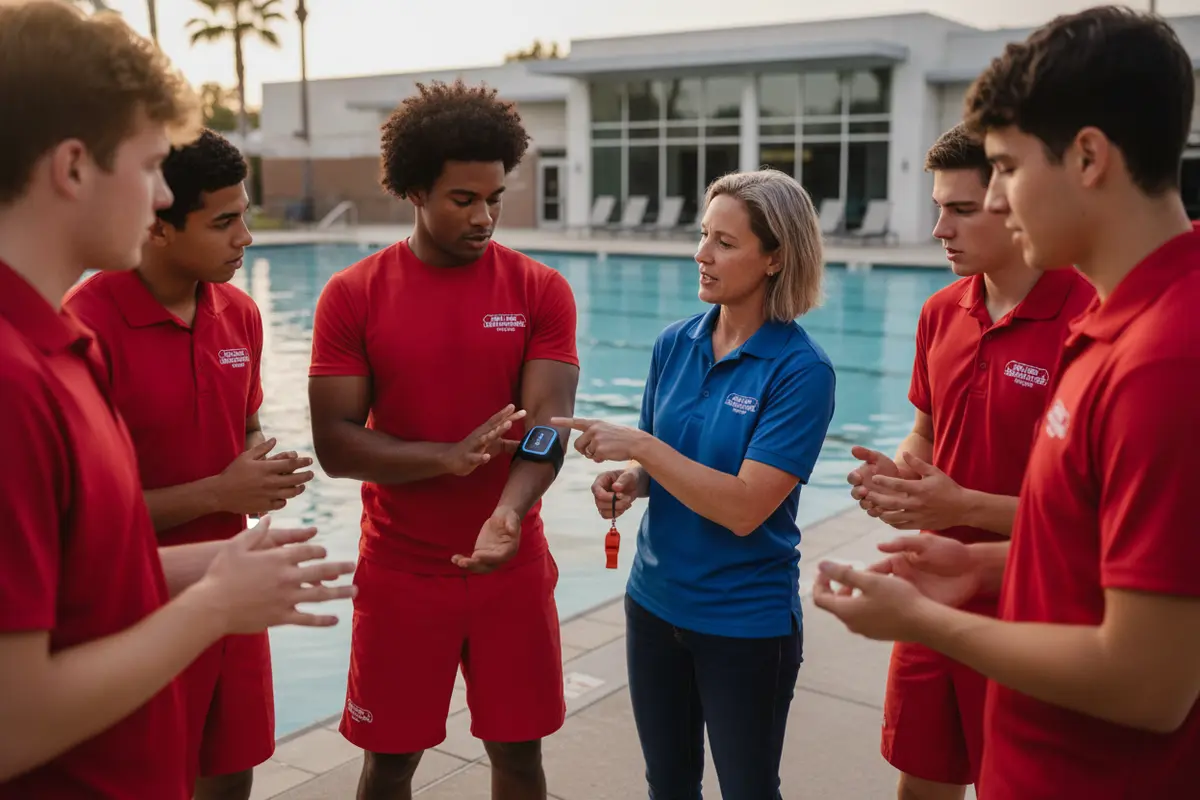
Teach-back is a useful check. Ask the staff member to describe or demonstrate the action they will perform, then correct any mismatch respectfully. For a spoken alert, practice the actual words and expected response. For a handoff, ask each person to state what they are taking responsibility for. This reveals where the explanation needs work without treating language difference as a measure of competence.
Check whether alerts can be understood in actual working conditions. Noise, distance, equipment, and a busy deck can affect communication. Practice with the facility's real alert methods. If wearable alerts or other technology are used, demonstrate the device, signal, meaning, and next steps. Staff need to know both what an alert means and what it does not mean.
Do not promise language support unless the provider confirms it. Before selecting a tool or training package, ask which languages, translated materials, interpretation, and training formats are available, and how technical terms are checked. Record the answer so the facility can plan instruction without relying on assumptions.
Which seasonal training checks should a supervisor record?
Records help leaders confirm that orientation reached the people who needed it and that important skills were practiced. They also support continuity when seasonal staffing changes. Keep the record factual: note what was covered, who participated, which procedure or equipment was practiced, and what follow-up was assigned.
A sign-in sheet does not show that someone can perform a procedure. Add a concise skills check or supervisor note for critical actions. Apply the same role expectations to staff doing the same work, while allowing the explanation or practice method to fit a person's language needs. If more instruction is needed, assign an owner and next step.
| Seasonal check | What to verify | Useful record |
|---|---|---|
| Role and coverage briefing | Staff know their assigned area, relief handoff, and response lead. | Assignment and briefing date. |
| Emergency procedure practice | Staff can locate the plan and perform assigned actions in a scenario. | Procedure, role, and follow-up. |
| Language and comprehension | Instructions can be explained or demonstrated clearly. | Method used to confirm understanding; avoid unnecessary personal details. |
| Alert and communications check | Staff recognize the signal, understand its meaning, and know the response path. | Alert route checked and issues escalated. |
| Shift handoff | Incoming staff receive current assignments and relevant operating information. | Handoff completion and owner of open items. |
Use one simple form across opening, mid-season, and staffing-transition checks. Capture the date, training lead, roles represented, scenario or equipment covered, and outstanding actions. Restrict access and retain records under organizational policy. The purpose is continuity and follow-up, not unnecessary collection of personal information.
Schedule a refresher after a meaningful change rather than waiting for a calendar date when responsibilities have shifted. Examples include a new operating area, revised response plan, changed alert route, or new group of employees. If practice reveals a confusing phrase or missed handoff, clarify the material and brief the affected shifts.
How should leaders adapt training as the season changes?
A seasonal plan needs review when conditions change, not only when a facility opens. Indoor and outdoor operations may have different schedules, staffing patterns, and communication challenges. Programs may rotate groups and staff during the season, so leaders need a reliable way to identify changes and get updated information to each affected shift.
Keep a change log for operational decisions that affect safety. Note an altered schedule, temporarily unavailable area, revised assignment, procedure update, or new alert device. For each change, identify who approved it, who needs to know, and how the information will be communicated. This supports follow-through but does not replace the formal emergency action plan or required records.
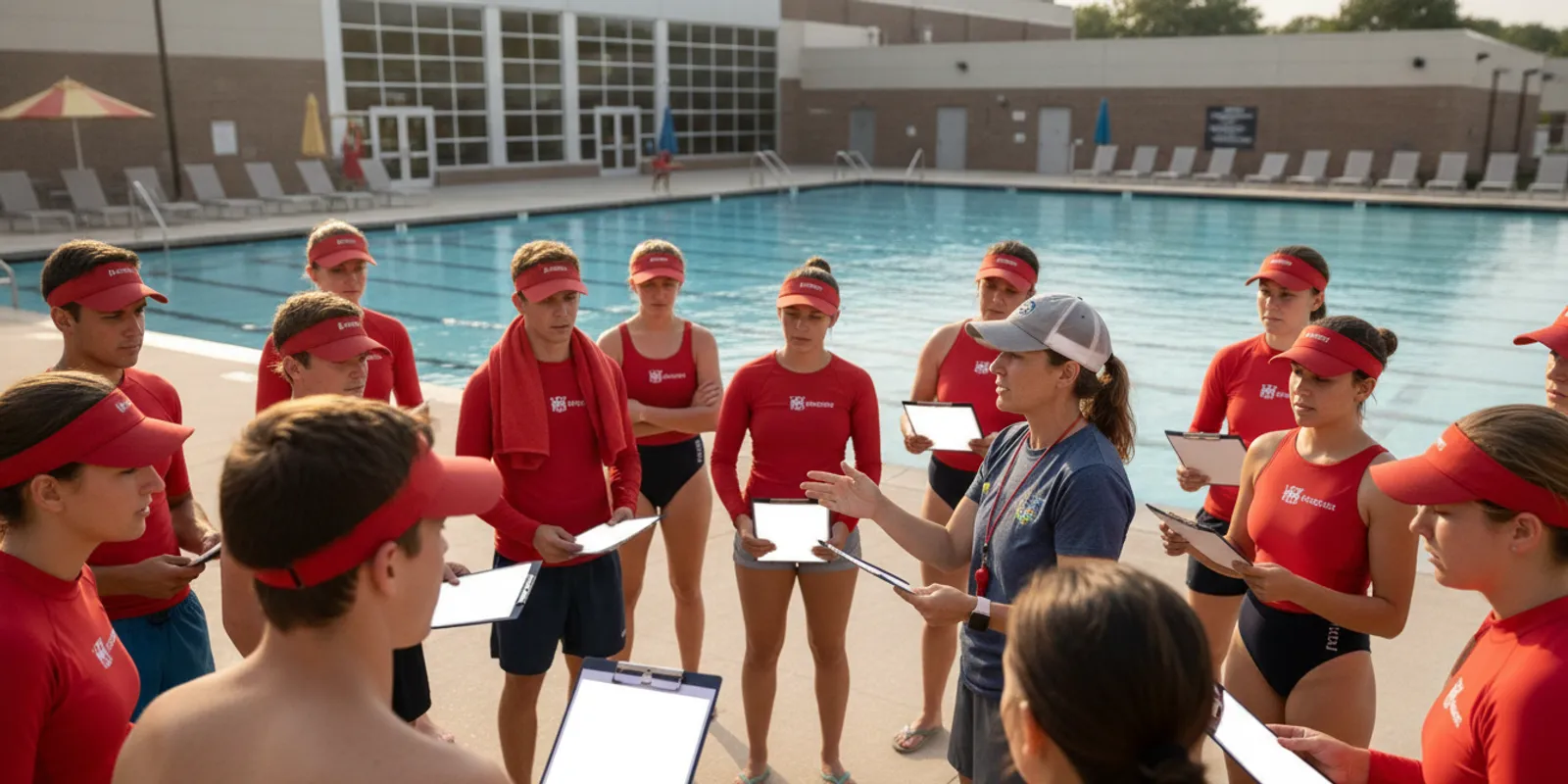
A short pre-shift huddle can review relevant conditions and assignments. Confirm roles and relief arrangements, mention known equipment or communication issues, and invite questions. If someone does not understand a critical instruction, resolve the uncertainty before relying on that person to perform the action. A brief check-in is more dependable than assuming information passed informally between shifts.
Plan for turnover before it happens. Give new staff a named contact and a clear route to current written procedures. When an experienced employee leaves or changes roles, transfer recurring responsibilities explicitly. If staff use different languages, provide explanation and practice that establish the same approved steps; do not ask workers to improvise translations of safety-critical terms.
After a drill, real alert, or confusing handoff, ask what helped and what caused uncertainty. Focus on improving the process, not blaming someone for asking a question or needing a different explanation. Update briefing materials when procedures need clarification, then tell affected staff which version to use. A simple loop—notice, document, clarify, practice—keeps routines useful as operations evolve.
How should a facility evaluate aquatic safety technology?
Technology belongs within a wider safety approach. First describe the operational need and what staff should do if a system sends an alert. Then compare how a proposed system fits water conditions, layout, staffing routines, communication channels, and training capacity. This keeps the decision focused on practical fit rather than a feature list in isolation.
Ask vendors to explain the full alert path in plain language: what is detected, how an alert is generated, who receives it, what signal they notice, and what staff do next. Ask how routine use and response scenarios are practiced. Confirm how staff should respond if a device or connection needs attention, and which responsibilities remain with facility personnel.
Wave Aquatic Safety describes its GUARDian Hub (w3000) as a communications and software hub connecting lifeguards, staff, and swimmers. Lifeguard tags can alert other guards when a tagged lifeguard remains submerged, while swimmer wearables can signal the Hub and notify staff through vibrating bracelets after an adjustable timer. These capabilities provide an additional alert layer; they do not replace lifeguards, scanning, an emergency action plan, or staff judgment.
The system is modular, and the Hub can operate on AC power or battery. WAVE describes its system as working across different water conditions, including clear and dark or murky water. Discuss the specific site, configuration, coverage needs, and operating conditions with the provider; a general product description cannot settle local suitability.
Review the GUARDian Hub overview, lifeguard alert equipment, and swimmer equipment information. Ask how each component is introduced to returning staff and seasonal hires. If assessing multiple options, use the product information to identify which staff roles use each component and ensure a demonstration covers every alert path.
Also discuss onboarding. WAVE describes deployment as assessing the facility, selecting a configuration, deploying the system, and training the team to integrate it into daily routines. Ask who should attend, how staff can practice after installation, and what support is available when a new employee joins. For language access, ask the provider to state exactly which options are available rather than inferring that specific support exists.
Facility leaders can review the frequently asked questions and the aquatic emergency action plan guide before a vendor discussion. WAVE's commercial aquatic safety system guide can help frame questions, while the facility's procedures remain specific to its operations and governing requirements. Check current pricing information directly with WAVE and confirm applicable terms and package contents rather than relying on an old estimate.
Use a written decision record to compare alternatives. State the operational need, who receives alerts, training arrangements, what the vendor confirmed, and which questions remain open. Include the staff who will use the system. A buyer may evaluate a tool differently from a lifeguard who must recognize its signal during an active shift.
What should a buyer ask before seasonal deployment?
A useful vendor discussion starts with the facility's operating reality. Share its seasonal schedule, water environment, staff roles, and common operational changes. Ask for clear answers that can be checked against existing procedures. If a response relies on unfamiliar terms, request a demonstration and an explanation suited to the people who will use the system.
- What does the system detect, and what conditions or limitations should staff understand?
- Who receives each alert, and what action is expected from each role?
- How will returning staff and seasonal hires get hands-on orientation?
- Which language options, translated materials, or training accommodations can the provider confirm?
- How will supervisors check that staff understand alert terms and can perform response steps?
- Which equipment and communication checks belong in opening or shift routines?
- What refresher guidance is available when the team or operating plan changes?
- What should the facility record, and who owns follow-up on unresolved questions?
Request written answers for capabilities, terms, training scope, and any language support important to the team. Do not treat an informal statement as a confirmed capability if it is essential to the purchase. Review current terms directly with the provider before budgeting, since package details can change.
Apply the same standard used for other safety tools: staff should know the purpose, limitations, alert meaning, and response path. An alert cannot act on its own. The facility still needs trained people, active supervision, appropriate emergency procedures, and ongoing review of how these parts work together.
Frequently Asked Questions
Does multilingual training mean every vendor provides translated materials?
No. Ask each provider which languages and training formats are actually available, and request confirmation before relying on them. If the vendor does not provide a needed option, determine how the facility will deliver accurate instruction under its policies.
How can a supervisor check that a staff member understood a procedure?
Ask the person to explain the steps in their own words or demonstrate the assigned action in a practice scenario. Correct gaps respectfully, repeat practice when needed, and record who will handle follow-up.
Can an alert system replace lifeguards or an emergency action plan?
No. WAVE positions its technology as an additional layer of protection in supervised aquatic environments. Attentive lifeguards, trained staff, and a facility-specific emergency action plan remain essential.
When should seasonal staff receive a refresher?
Provide one when roles, operating conditions, equipment, alert routes, or procedures change, and when practice or a handoff reveals confusion. Follow the facility's schedules and applicable requirements for recurring training.
What should a facility ask WAVE about its system?
Ask how a proposed configuration fits the site, how the alert path works, what onboarding and support are available, and which language options the provider can confirm.
Make seasonal preparation repeatable
Seasonal preparation works best when staff can understand, practice, and repeat clear procedures across shifts and roster changes. Review communication needs early, confirm that each person can perform their role, and assign follow-up so it does not disappear between briefings. Treat aquatic safety technology as one part of a broader plan that keeps trained people and attentive supervision at the center.
