Reducing false alarms in facility drowning detection systems is an operations job, not a way to quiet the deck. Aquatics directors still need every real submersion alert to reach staff. The useful work is to sort true emergencies from repeat non-emergency alerts, then fix the causes that do not belong in a rescue.
A facility reduces extra alerts by defining what counts, reviewing patterns, checking wearables and the water, and setting the delay timer. Staff still treat every alert as real until a person confirms it is not.
Wave Aquatic Safety builds the GUARDian system for supervised pools, lakes, camps, and other aquatic programs. It adds a layer of protection beside lifeguards. It does not replace them, and it does not prevent every drowning. This guide is for directors who already have, or are comparing, a wearable system and want a calmer deck without a slower response.
What Counts as a False Alarm in a Facility System?
A false alarm is an alert that is not a rescue. Some of those alerts still mark risky play that staff should correct. Only alerts with no safety value should be treated as noise.
Start with a shared definition before anyone changes a setting. On a wearable system, an alert means a device stayed under the surface past the time the facility set. That can be a swimmer in trouble. It can also be a handstand, a breath-holding contest, or a camper who walked out of the water zone still wearing a tracker.
A 2022 observational study in the International Journal of Critical Illness and Injury Science followed the WAVE system at a camp pool for eight weeks. Staff said risky underwater play and leaving the pool area were the top reasons alerts started. They found the extra awareness useful and were neutral about false alarms. The authors noted that alerts tied to risky play should not be written off as false. Because they let staff stop behavior that can lead to a blackout underwater. Read the study on PubMed Central.
Write three labels into the shift log so the review stays honest:
- Rescue or possible rescue. A guard entered, a spoken alert went out, or staff could not rule out distress.
- Useful correction. The swimmer was safe, but the alert exposed breath holding, horseplay, or a missing buddy.
- Non-emergency repeat. The same cause keeps firing and staff can fix it without weakening the next real alert.
If the team calls every non-rescue a false alarm, they will try to silence signals that are doing useful work. If they treat every alert as a full facility emergency, guards will stop trusting the next vibration. The middle label keeps both mistakes off the deck.
How Does Reducing False Alarms in Facility Drowning Detection Systems Start?
Review alerts by time, zone, and cause before anyone lengthens the delay. A pattern points to a fix. A single alert does not.
Pick one person who owns the review. At a YMCA, camp, school, or municipal pool, that is usually the aquatics director or head guard, not whoever happens to be on the chair. They should look at a full week of open swim, lessons, and camp blocks, not one loud afternoon.
In that camp-pool study, 40 to 60 children were in the water at a time, and the system started an alert about one or two times per hour. That rate is a benchmark for a busy youth program, not a promise for every pool. A quiet lap pool should not be judged against a camp group. A lake waterfront with poor sightlines may alert differently again.
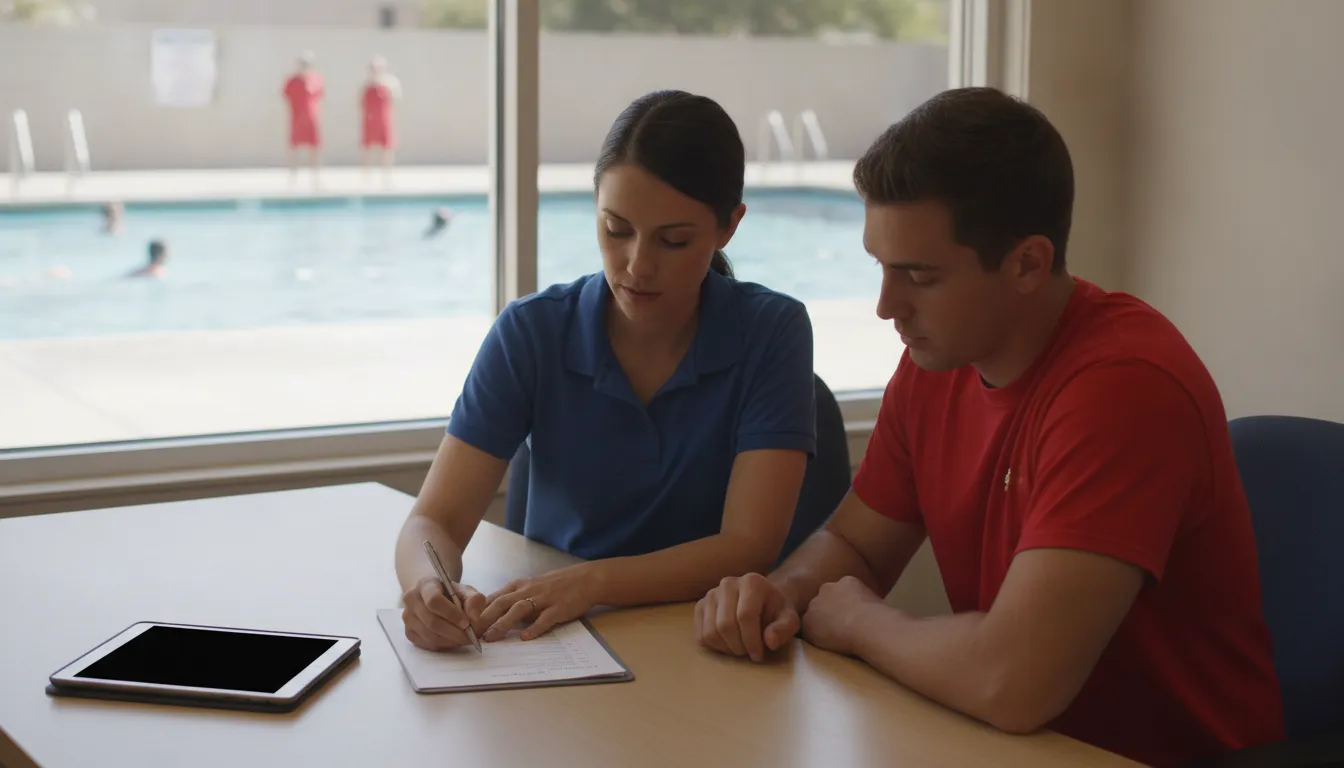
For each repeat alert, record four facts while the memory is fresh:
- Clock time, program type, and which water area.
- Whether a guard bracelet vibrated, a public warning followed, or both.
- What the swimmer was doing when staff arrived.
- Whether the same wearable, the same child, or the same activity shows up again.
Supervisors who want a fuller question list for alert logs can use the guide on questions supervisors should ask about alert data. Keep this review shorter. The only decision here is whether the pattern is a training issue, a wearable issue, a timer issue, or a true rescue load.
Do not lengthen the timer after one busy day. Wait until the same cause shows up across several shifts. A single rescue, or any alert staff could not explain, is a reason to leave the setting alone.
Which Checks Cut Repeat Alerts Without Slowing a Rescue?
Most repeat alerts come from how wearables are worn, where swimmers play, and whether the device left the water zone. Fix those before touching the timer.
GUARDian Swimmer uses wireless AquaSense trackers. A tracker starts the clock when it goes under. If the swimmer stays under past the facility threshold, lifeguards get a vibration on their staff bracelets. If the swimmer is still under for a second preset period, the hub can send a facility-wide public warning. That two-step path is the point. The first alert is for the guard. The second calls more people. The commercial pool safety FAQ spells out both steps.
Work through the checks below before anyone asks for a longer delay. Each one removes a cause that is not a drowning.
| Check | What staff look for | Fix that keeps response intact |
|---|---|---|
| Fit | Headband or goggle clip slips, sits loose, or is shared mid-session. | Refit at entry. Pull a poor fit out of rotation. |
| Play rules | Handstands, breath holding, or underwater tag in one zone. | Enforce the rule. Log it as a useful correction. |
| Zone exit | A camper leaves the water still wearing a tracker. | Collect wearables at the exit. Assign one staffer. |
| Battery status | Hub flags a tracker that needs attention. | Swap it. Batteries are rated about 18 to 24 months. |
| Water and sightlines | Glare, bubbles, murk, or a blind corner. | Keep the alert. Move a chair or add a scan. |
AquaSense is built for clear and dark water, so murk is not, by itself, a reason to distrust a wearable alert. Camera systems can struggle in those conditions. A wearable does not. If alerts cluster in a glare zone, fix the sightline and keep the vibration.
Maintenance still matters, but it is a separate job. Use the pool safety alert system maintenance checklist for hardware health. Use this review for why an otherwise healthy system keeps calling the deck.
How Do You Set the Delay Timer Without Weakening Response?
Set the delay from the facility's own rescue standard. A longer timer hides alerts. It does not make detection better.
The live GUARDian page describes an adjustable delay that starts when a wearable is submerged, up to 30 seconds, set per facility. The FAQ describes the same idea as a preset threshold for the guard warning, then a second preset period before a public warning. Those two clocks do different jobs. Do not collapse them into one long wait.
Use a short written rule:
- The guard alert must still fire inside the time your emergency action plan allows for recognizing a submerged swimmer.
- The public warning stays a second step. It should not be the first thing the building hears for ordinary underwater play.
- Any proposed increase gets tested on a controlled submersion with a supervisor in the water, not guessed from a noisy Saturday.
- Write the old time, the new time, the date, and the person who approved it.
A longer delay can look like a win on a spreadsheet because the alert count drops. It is not a win if a real submersion now waits through the extra seconds. The World Health Organization notes that drowning risk rises when children are around water without active adult supervision. A detection system does not replace that supervision. It only helps staff notice a long submersion sooner. See the WHO drowning fact sheet.
If the argument for a longer timer is "guards are tired of vibrations," the problem is response design, not the clock. Read how facilities improve lifeguard response time before editing the threshold. Slowing the alert to spare attention is the failure this review is meant to prevent.
How Should Training Keep Every Alert Worth a Look?
Training fails when staff learn to wait out an alert. It works when every vibration gets eyes on the swimmer, and only a supervisor changes the system.
Teach the sequence in plain words. Bracelet vibration means look now and start moving if you cannot see the swimmer's face. Spoken public warning means the second timer has elapsed and more staff follow the emergency action plan. Neither signal is a suggestion to finish a conversation first.
Tell the team which alerts they may later label as useful corrections. They do not make that call while the swimmer is still under. They make it after the face is up and the zone is covered. New guards, camp counselors, and front-desk staff who support a hotel or waterpark deck need the same rule. Hospitality programs often have no dedicated lifeguard on the pool. WAVE still does not replace one. It gives attendants and security a faster notice so someone moves.
Three habits keep the response from decaying:
- One supervisor owns timer changes. Chair guards do not edit the threshold to quiet a shift.
- After-action notes use the three labels above. Praise a guard who checked a "false" alert. Never praise someone for ignoring one.
- Repeat the drill when a new season, a new camp group, or a new water area opens. Fit and exit control slip at those handoffs.
Parents asking how a pool handles alerts need plain language too. Point them to what families can ask a facility, and keep the technical review with the aquatics lead. Directors comparing system types can start with what a submersion alert is and the commercial pool safety FAQ. Product scope for swimmers and guards is on swimmer equipment and lifeguard equipment.
What Should a Director Leave Alone?
Do not chase a lower alert count by disabling steps, hiding the public warning, or telling guards to use judgment before they look. Those cuts weaken the response the system is there to support.
A quiet week is not the goal. The goal is a week where staff can explain every repeat. If the log is mostly useful corrections, keep the timer and coach the water. If the log is mostly zone exits and loose headbands, fix check-in. If the log includes a rescue or an alert nobody could explain, leave the clocks where they are and review coverage instead.
Two product facts should stay out of this argument. GUARDian deploys without permanent pool construction, and AquaSense wearables use a sealed battery rated at about 18 to 24 months rather than a nightly charge. Neither fact is a reason to stretch the delay. They only explain why a facility can run the review during a normal season instead of waiting on a construction window.
Bring the written labels, the week of notes, and the current guard and public-warning times to a consultation. Wave Aquatic Safety can confirm whether the GUARDian setup matches the programs on the schedule. The facility still owns the emergency action plan, and staff still answer every alert.
Frequently Asked Questions
How can a facility reduce false alarms in a drowning detection system?
Define a rescue, a useful correction, and a non-emergency repeat. Review a full week of alerts by time, zone, and cause. Fix fit, play rules, and zone exits before anyone lengthens the delay. Keep every live alert on a person until the swimmer is seen.
What is the most common cause of repeat alerts?
In the 2022 camp-pool study of the WAVE system, staff named risky underwater play and leaving the pool area as the top reasons alerts started. Those are coaching and check-in issues more often than hardware faults. Confirm the pattern in your own log before changing a timer.
Do pool alarms stop a drowning on their own?
No alarm stops every drowning. A wearable system is an added layer in a supervised program. Lifeguards, scanning, and the emergency action plan still do the rescue. Treat marketing claims that a device replaces staff as a reason to keep looking.
Will a longer delay timer make the system safer?
Not by itself. GUARDian's adjustable delay can run up to 30 seconds so normal dips do not page the deck. Stretching that window trims the count and also delays the guard. Set it from your rescue standard, then test it with a supervisor in the water.
Should staff ignore alerts they think are false?
No. Staff look first and label later. Ignoring a vibration is how a real submersion gets missed. Only a supervisor, after a written review, changes settings or pulls a wearable from rotation.
Where should a director go next?
Bring a week of alert notes, your current timer settings, and the programs you run. Wave Aquatic Safety can walk through whether GUARDian fits the facility and how the two alert steps should be set. Start with a consultation, not a guess on the clock.
